
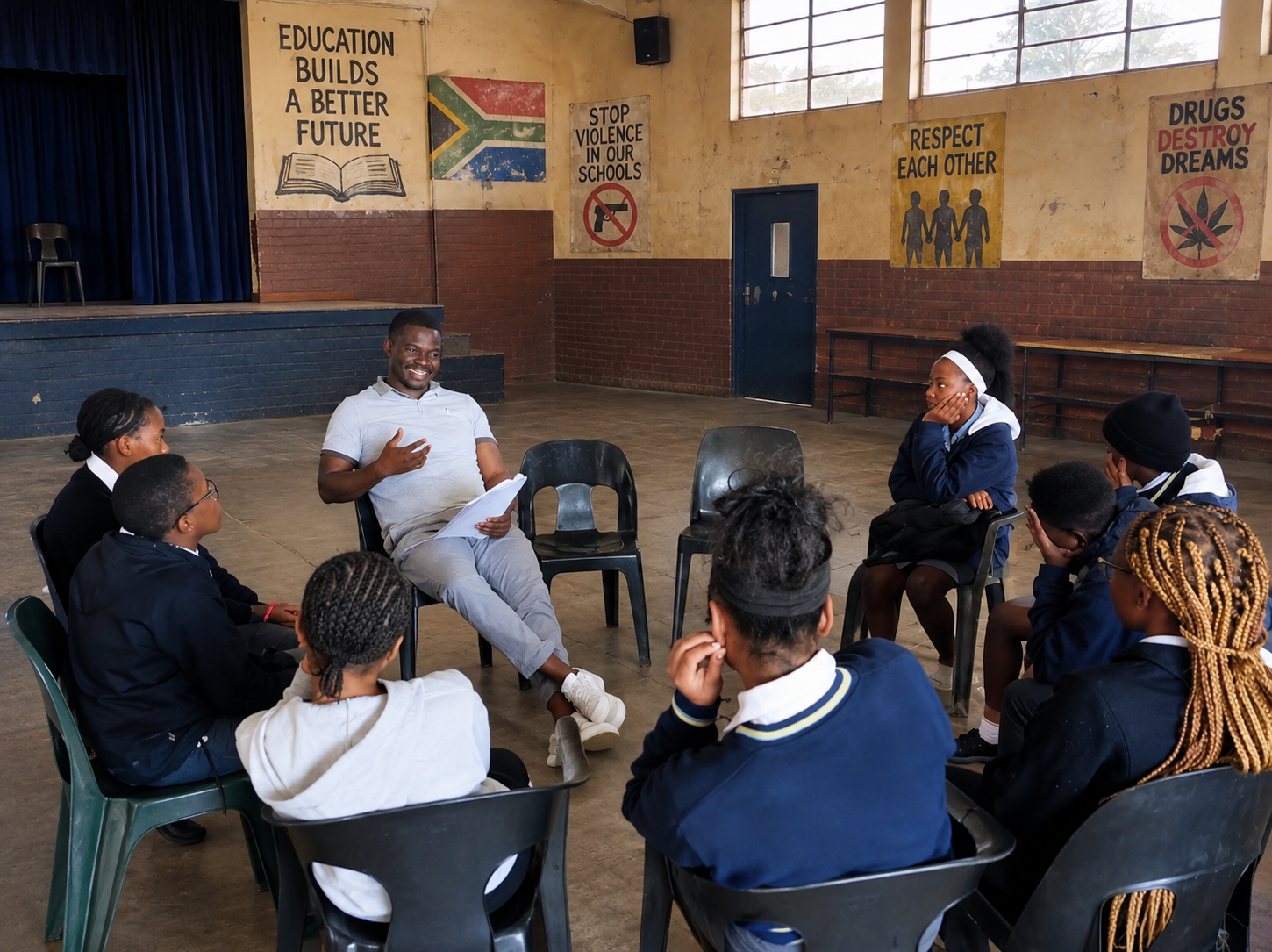
Preventing Aggression and Violence (PAAV) is an evidence-based cognitive-behavioural intervention providing violence-prevention and social-skills training for high-risk youth in secondary schools.
The programme provides learners with practical knowledge and skills relating to emotional management, violence prevention, communication, relationships and conflict resolution.
High-risk youth in secondary schools.
The purpose of PAAV is to support learners in developing practical skills that can help them manage emotional triggers, navigate conflict, develop healthier relationships and reduce behaviours associated with interpersonal violence.
PAAV aims to help learners:
- Manage anger and emotional triggers.
- Develop strategies for preventing interpersonal violence.
- Build healthy and respectful relationships.
- Strengthen conflict-resolution skills.
- Develop empathy and personal accountability.
- Improve communication and negotiation skills.
Learners receive training and awareness on identifying, preventing and responding appropriately to risks associated with:
- Violence
- Bullying
- Relationship abuse
- Cyberbullying
- Technology-
facilitated abuse
- Harmful peer behaviours
Learners are supported to recognise emotional triggers and develop strategies for managing emotional and physiological responses before conflicts escalate.
The programme focuses on skills that can help learners develop respectful, healthy, constructive and non-violent relationships.
Learners develop practical communication, negotiation, problem-solving and de-escalation skills that can help them respond to conflict in more constructive ways.
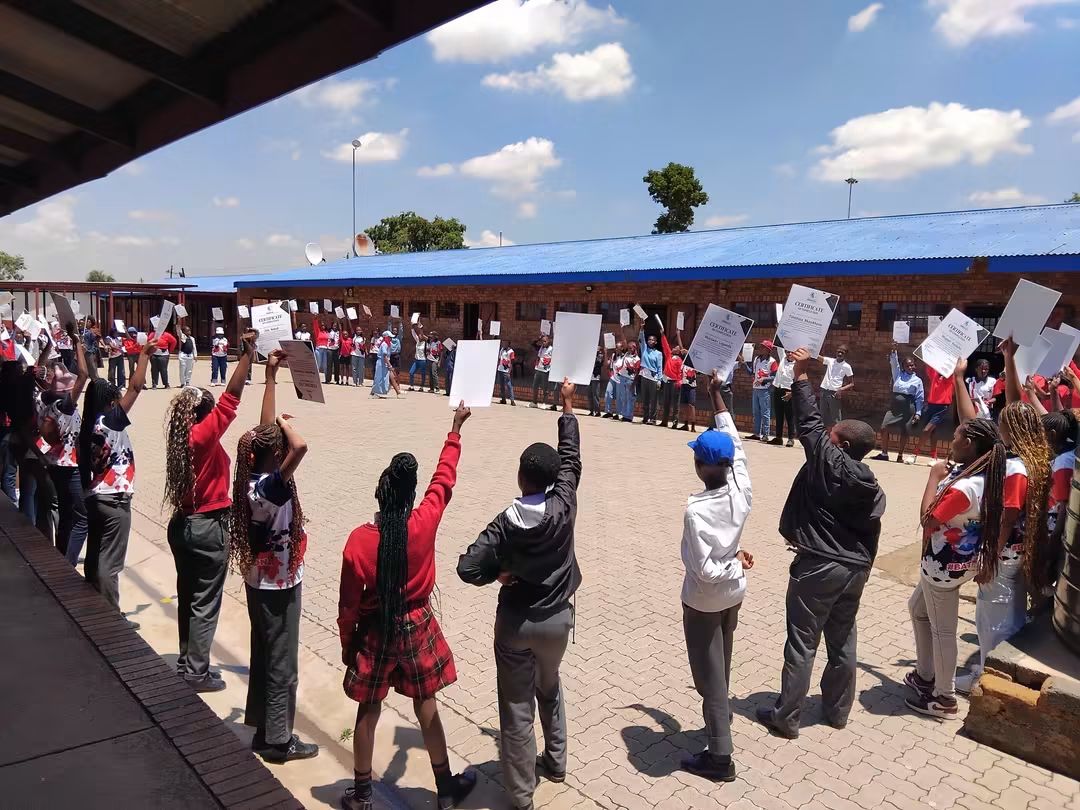
PAAV combines education, skills development and practical learning around violence prevention and social relationships.
The programme focuses on helping learners understand risk, recognise emotional triggers, develop constructive responses and strengthen interpersonal skills.
Its emphasis is preventative: rather than waiting for conflict or violence to occur, learners are supported to develop skills that may help them make safer and more constructive choices.
The intended outcomes of PAAV include learners having greater knowledge and practical skills relating to:
- Emotional regulation
- Violence prevention
- Conflict resolution
- Communication
- Negotiation
- Healthy relationships
- Empathy
- Personal accountability
These are intended programme outcomes, not claims of measured results. BSCPP would continue developing monitoring systems to assess programme reach, participation and outcomes over time.
Young people may encounter multiple social and interpersonal pressures that can increase vulnerability to conflict and violence.
Providing constructive skills and opportunities can form an important part of prevention.
Through school-based education and skills development, BSCPP seeks to contribute to environments where young people can learn healthier ways of managing emotions, relationships and conflict.